RMIT University
Saigon, South Hanoi city, Danang, Vietnam Campus
www.rmit.edu.vn/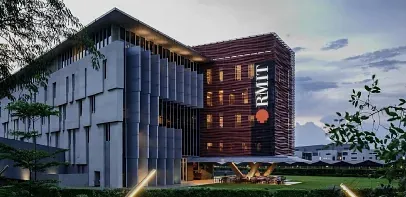
- Overview
- Ranking
- Intakes
- Courses
- Cost to Study
- Scholarships
- Admissions
- Placements
- Gallery
- FAQs
Overview
Founded in 1887, RMIT University is Australia’s biggest tertiary institution, with a strong presence both nationally and internationally. In Australia, it operates two main campuses along with a third additional site. Expanding globally, RMIT established its Vietnam branch in 2000, which now includes three campuses in Ho Chi Minh City, Hanoi and Danang. The university also extends its global footprint through a Research and Industry Collaboration Centre in Spain, fostering innovation and partnerships across borders.
As the Asian branch of Melbourne-based RMIT University and the first fully foreign-owned university in Vietnam, RMIT Vietnam delivers a world-class education and a truly international student experience in the heart of Asia. With a student population of approximately 12,000, the university offers a diverse academic environment across its two campuses in Ho Chi Minh City and Hanoi.
Students who choose to study at RMIT University Vietnam engage in globally relevant programs across Business, Technology, Communication, Design, and Fashion. These disciplines are structured under four academic divisions: the School of Science, Engineering and Technology; the Business School; the School of Communication & Design; and the School of English & University Pathways, each designed to meet international standards and industry demands.
RMIT Vietnam collaborates closely with industry, government, and non-profit sectors to drive research that directly benefits communities across Vietnam and the ASEAN region. Its research targets high-impact areas, including Sustainable Development, Digital Transformation, Smart Cities, and Social Innovation. This focus takes shape through strategic initiatives such as the River Cities Network, the Fintech-Crypto Hub, and the Smart and Sustainable Cities Hub (SSC), all of which contribute to practical solutions for regional and global challenges.
RMIT Vietnam has earned a wide range of certifications for both academic and research excellence, along with multiple awards recognizing its achievements in other key areas. With a growing alumni network of over 25,500 graduates, the campus demonstrates a strong foundation of student success, institutional support, and long-term impact.
665
Total International Students
Rankings
RMIT University is recognized among the Top Universities Worldwide, reflecting its strong global reputation for academic and research excellence. The university consistently features in prestigious global ranking platforms such as the QS World University Rankings and the Times Higher Education (THE) University Impact Rankings. The university also performs exceptionally well in subject-specific and Global MBA rankings, showcasing the quality and diversity of its programs. Moreover, the RMIT University Vietnam campus has received several regional awards across various parameters.
#125
QSWR
#251 - #300
Times Higher
#198
US News
*Note: University rankings are subject to change based on periodic evaluations and updates.
Intakes
RMIT University Intakes are divided into two categories: Major and Minor. The Major Intake provides the widest range of programs, while the Minor Intakes have fewer options, requiring students to plan their applications carefully.
The October intake is the primary admission period, offering the full range of Postgraduate and Undergraduate courses.
The February and June intakes are smaller. February generally caters to Undergraduate courses only, whereas June provides selected options at both Postgraduate and Undergraduate levels.
Top Courses
RMIT University courses at the Vietnam campus cover a broad spectrum of disciplines at both Postgraduate and Undergraduate levels. It offers more than 4 Postgraduate programs, 2 Graduate Certificates, and over 26 Undergraduate programs, all aligned with international academic and industry standards to support strong career outcomes.
In addition to academic programs, RMIT University Courses also include pathway options such as Foundation Studies and English Language programs. These are designed for students planning to enter international universities and are delivered by highly qualified and committed faculty to ensure a smooth academic transition.
Note: The listed courses are among the popular choices; however, universities may offer a wider range of programs. It is recommended to check the university’s official website for the complete list of available courses.

Cost to Study
RMIT University Vietnam tuition fees vary depending on the program of study and academic level. The university operates on a three-semester system each year, with students typically enrolling in a maximum of three courses per semester. Payments are made on a course-by-course basis at the start of each semester. In addition to academic fees, students are also required to pay non-academic charges, such as the compulsory medical insurance fee for international students.
RMIT University Vietnam fees can be paid through several convenient methods, including online bank transfers, third-party payment providers, and in some cases, credit card transactions, offering flexibility to both local and international students.
| Types of Expenses | Annual Expenses in INR |
|---|---|
| Annual PG Tuition fee | ₹17.41 Lakhs |
| Annual UG Tuition Fee | ₹11.72 Lakhs |
| Annual Accommodation & food expenses | ₹6 Lakhs |
Note: The tuition fees mentioned are approximate and may vary. It is recommended to check the university’s official website for the most up-to-date fee structure.
Scholarships Available
RMIT University scholarships for the Vietnam campus are awarded each year to high-achieving and deserving students. So far, the university has granted more than 566 billion VND in scholarships, benefiting over 1,849 students from both Vietnam and across the globe.
For international applicants, scholarship opportunities are available for Undergraduate programs as well as Foundation Studies. These scholarships are designed to ease financial barriers and support students in accessing a globally recognized education at RMIT Vietnam.
Admission Requirement
The RMIT University admission process for the Vietnam campus differs based on the level of study, whether Postgraduate or Undergraduate. Along with meeting the academic eligibility criteria, applicants are also required to satisfy the English language requirements, which are essential for admission to any program. Indian students planning to study at RMIT Vietnam can find the admission requirements here.
Applicants are required to hold an Undergraduate Degree in a relevant field from a recognized institution with a minimum score ranging between 50% and 60%.
✅ IELTS: Overall 6.5 with no band less than 6.0
✅ TOEFL: Overall 79 with no band less than 21
✅ PTE: Overall 58 with no band less than 50
Eligibility includes the All India Senior School Certificate (AISSC) or the Indian School Certificate (ISC) with a minimum of 65%. Candidates from State Boards of Education (Higher Secondary Certificate, HSC) require a minimum of 70%.
✅ IELTS: Overall 6.5 with no band less than 6.0
✅ TOEFL: Overall 79 with no band less than 21
✅ PTE: Overall 58 with no band less than 50
Note: Admission requirements may vary, it is advisable to check the official university website for the most up-to-date and specific eligibility criteria.
Placement Overview
RMIT Vietnam equips students with comprehensive career support through the Careers, Alumni & Industry Relations team. From day one, students can access tailored one-on-one consultations to craft effective career plans, refine resumes, and prepare for interviews. The on-campus Job Shop offers drop-in services including CV reviews, cover letter assistance, and job-search guidance, available for both internships and graduate roles.
Complementing this are skill-building workshops, industry mentoring, internships, and networking opportunities such as Career Week and employer-led events. RMIT’s ‘Personal Edge’ program further enhances employability by developing creative, ethical, analytical, and leadership skills.
Top Recruiters
Jobs after Graduating from RMIT University, Vietnam Campus
Note: - These figures are indicative and may vary as per the industry norms.
Student Essential Services
RMIT Vietnam supports students through services like Student Connect, which assists with academic and administrative matters. The university also enhances campus life through clubs, events, and extracurricular programs that promote engagement and personal development.
RMIT Vietnam supports around 60 student run clubs, categorized into sports, arts, and social/special-interest groups. Clubs include basketball, football, ultimate frisbee, badminton, aikido, judo, billiards, MMA, dance, music, and musical theatre. Special-interest groups span community service, culture, business, environment, psychology, international student support, and postgraduate networking. These clubs offer workshops, competitions, events, and volunteering opportunities.
RMIT Vietnam’s Student Academic Success (SAS) team delivers comprehensive support to help students navigate university-level study. Services include the Writing and Learning Centre for assignment feedback and skill-building; Peer-Assisted Learning led by top-performing peers; and Academic Success Advisors who help at-risk students with goal setting and action plans. The RMIT Learning Lab provides online resources, tutorials, quizzes and activities to cultivate core academic skills.
RMIT Vietnam does not offer on-campus housing but provides comprehensive support for off-campus accommodation. The Residential Support team helps students locate suitable apartments near Ho Chi Minh City and Hanoi campuses. They maintain a curated list of recommended rental options—including shared houses, studios, and furnished apartments—and guide students through rental and tenancy matters.
RMIT Vietnam’s Wellbeing Department offers free, confidential psychological support through Counselling & Psychological Services (CAPS), Equitable Learning & Accessibility services, and Safer Community initiatives. CAPS provides short term counselling sessions, psychological health workshops, and referrals.
FAQs
Want to Study in Vietnam ?
Fill in your details and we'll call you back